
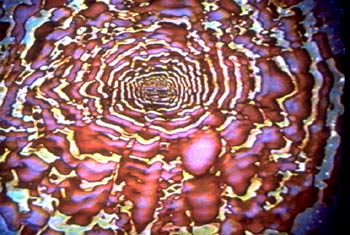
| mandala |
|
Mandalas are found all over the world and from most known periods of history. One can find them particularly in medieval Christianity, the Pueblo and Navaho Indians and in Tibetan Buddhism. They are at the basis of many religious structures including churches (it has been argued that the word “church” derives from early words for circle) and Buddhist stupas. They are regarded as age-old symbols of “wholeness”, “totality” and “deity”, and symbolise the universal Self as opposed to the individual self or ego. I found that consciously creating a twentieth century version was an extremely integrating experience personally and left me feeling in some way more whole and more fulfilled than before. Interestingly, it has been speculated that many of the universal religious practices of mankind, including the creation of mandalas, serve to promote “bilateral hemispheric integration” of the right and left sides of the brain. Good reading: Mandala, Jose & Miriam Arguelles, Shambala, 1972 And within
the suggested reading in Archetypes
|