
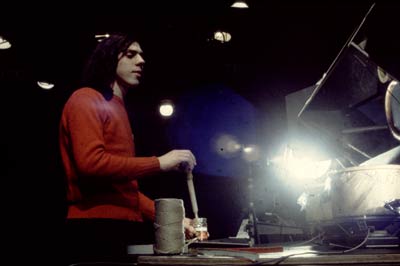
| Improvisation |
|
All these influences, plus the technical difficulty of editing video with any subtlety in those early days of the medium, combined to result in an aesthetic based around simultaneous live performance of sound and visual production and an unedited recording. Virtue was made out of the difficulties – because of technical complexity and consequent limitations on detailed visual control, it was natural for these performances to develop strong elements of improvisation. This period was also characterised by the emergence of “performance art”. Each video would be based on a theme, usually a process, and the improvisation would be based around an agreed structure in time for the various visual and sound elements selected. Even later, when my visual control developed greater sophistication through familiarity and devices such as the Videokalos image processor, the improvisation was retained as a key “structural” component. See Videotape
Improvisations and Video Work in the writings section
|